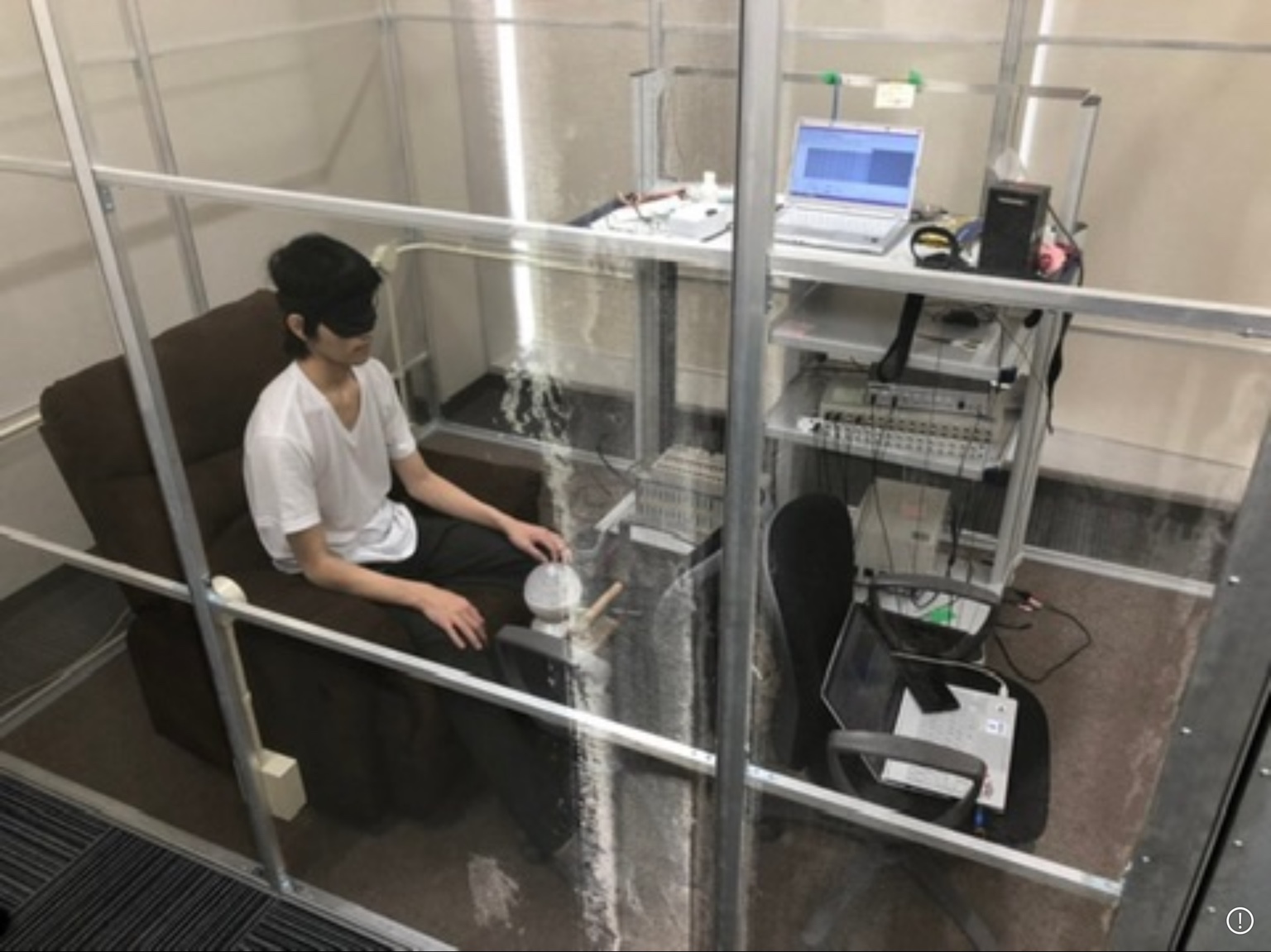
EEG × Unity / HCI
Built and studied an interactive system that mapped information from a consumer EEG headset to the facial expression of a Unity character. This was my first attempt to use brain information as an input to a computer system.
APPLIED RESEARCH ENGINEER
Takaya Suetake / 末竹 隆也
I began research in EEG, BCI, and Human Sensing in my first undergraduate year. Today I work in an automotive verification organization across wireless communication, physical-system evaluation, requirements, automation, and LLM-based tooling, while pursuing Neurotechnology-related applied R&D through Cereportal in parallel.
ABOUT
My long-term technical interest is consistent: turning information generated by people into systems that can actually be used.
At university, I worked on BCI and Human Sensing using EEG, eye tracking, and subjective evaluation. In industry, I entered the automotive field because of an interest in applying brain information to vehicle systems, and then gained broad experience across hardware, software, wireless communication, smartphone integration, and quality through mass-production system verification.
I am now working to recombine those experiences into applied Human Sensing and BCI R&D, with a focus on translating research prototypes into robust real-world systems.
RESEARCH ORIGIN
Across four undergraduate years, my research evolved from HCI to multimodal sensing, human-state estimation, and machine-learning-based EEG classification.
Built and studied an interactive system that mapped information from a consumer EEG headset to the facial expression of a Unity character. This was my first attempt to use brain information as an input to a computer system.
Combined a Tobii eye tracker with EEG to analyze relationships between gaze / eye movement and brain activity. The initial trend analysis did not produce sufficiently clear results, which later motivated reformulating the problem as a machine-learning classification task in my graduation research.

Investigated whether subjective relaxation ratings for several scents showed trends corresponding to frontal EEG activity. Presented the research at the final stage of Science Intercollegiate.
Extended the Year-2 research into a classification study. EEG was recorded from approximately 13 participants using an 8-channel 10–20 setup under roughly four visual conditions. Signals were transformed into the frequency domain at approximately 0–20 Hz and classified using a CNN.
Result: Performance was slightly above 50% for a four-class problem, compared with a 25% chance level. The model performed above random, but the result was not strong enough to claim practical discrimination accuracy.
PROFESSIONAL CAREER
I have remained within the verification organization while expanding my role from mass-production system testing to wireless-domain leadership, LLM / evaluation infrastructure, automation, and requirements support.
Joined as a software engineer, then moved into the verification organization as part of a team expansion. Worked on smartphone-integration verification for a mass-production automotive model.
Led smartphone-integration verification for an upgraded model as a technical / project coordination role, working across external partner organizations rather than as a people manager.
Established and drove verification activities for Wi-Fi, Bluetooth, and smartphone integration from the initial phase of the next-generation model program for roughly two years.
Selected within the verification organization for technically advanced work, including local LLM server setup, evaluation-support tooling, and evaluation-infrastructure related activities.
Working in evaluation automation on tooling that supports functional-requirement development and on various validation activities using physical systems.
Public descriptions are generalized to avoid disclosing customer- or product-specific confidential information.
PUBLICATIONS / AWARDS / COMMUNITY
Role: Research Lead / Primary Author
I led the abstract, problem formulation, experiment design, analysis plan, and manuscript writing. The conference presentation itself was delivered by a collaborating community member.
The study compared direct test generation from source code with a TRM-mediated approach, reporting 67.4% perspective coverage for source-only generation versus 100% with TRM. Mutation analysis showed a smaller difference, 93.6% vs. 95.2%, leading to the interpretation that TRM's value is not simply more detected faults, but a more stable minimum detection level.
SQiP program ↗
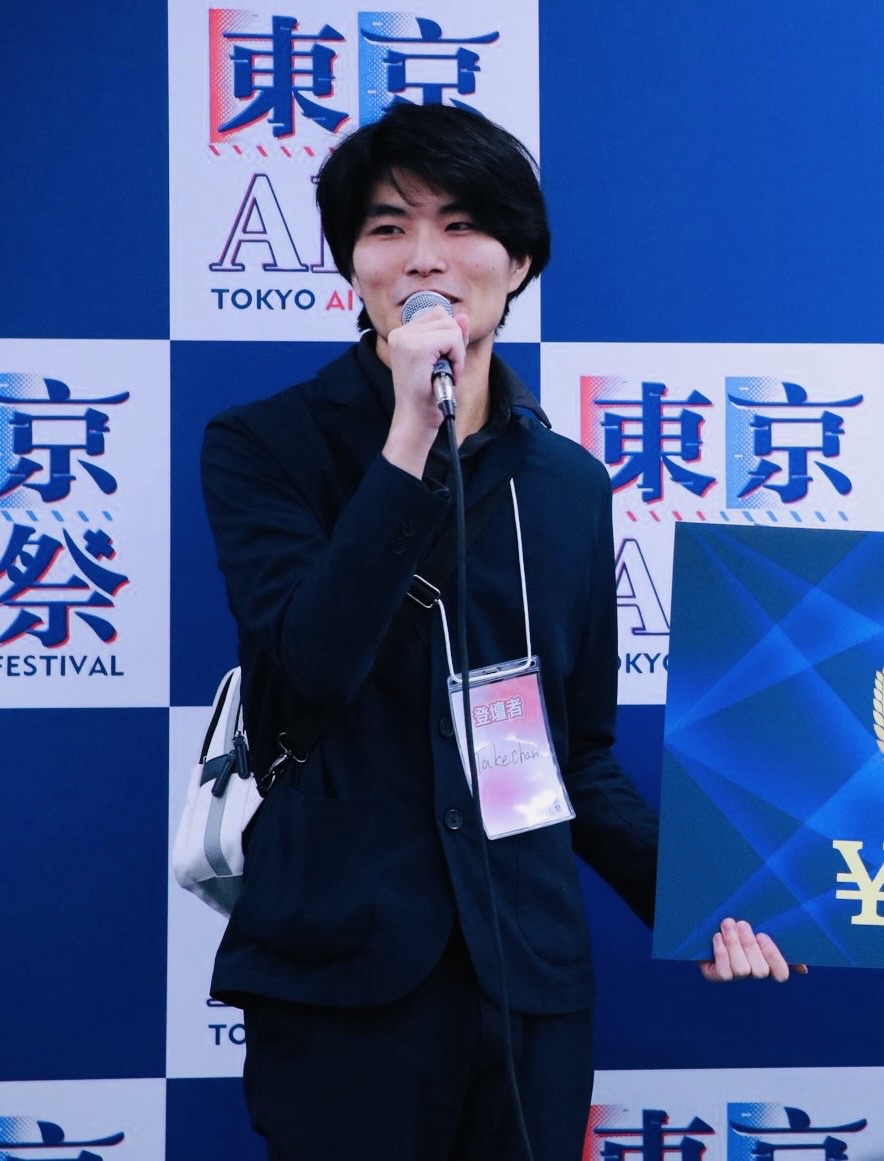
Developed and presented RemoteClaudeOPS, an AI-driven development product.
Winner
Official result ↗Finalist / Research Presentation
Human Sensing research using olfactory stimuli, subjective ratings, and frontal EEG.
Organizing Committee
JaSST'26 Tokyo ↗PARALLEL R&D / PROJECTS
In parallel with my primary role, I work on applied R&D and business activities related to brain information science and Neurotechnology. As the sole technical member, I cover the engineering side with the goal of helping smaller organizations take steps into applied brain-information research.
cereportal.com ↗An AI-driven development platform combining natural-language implementation, Docker, WebSocket, a mobile UI, and port forwarding.
GitHub repository ↗SKILLS
EEG, ERP / P300 experience, Eye Tracking, subjective evaluation, visual stimulation
FFT, EEG frequency analysis, CNN, Deep Learning, LLM, local LLM infrastructure
Automotive embedded systems, HW/SW integration, Wi-Fi, Bluetooth, smartphone integration
Test design, requirements analysis, modeling, traceability, experimental design, manuscript writing
Technical reading: Experienced in reading academic literature in English through undergraduate BCI / EEG research.
Conversation: Practical speaking and technical presentation remain areas for continued improvement.
CURRENT MISSION
My goal is not simply to “return” to BCI / Human Sensing, but to bring back the systems perspective I gained from automotive engineering: embedded systems, communication, quality, verification, AI, and requirements engineering. I want to work as an Applied Research Engineer who can connect research results to systems that survive real-world constraints.
CONTACT / LINKS